
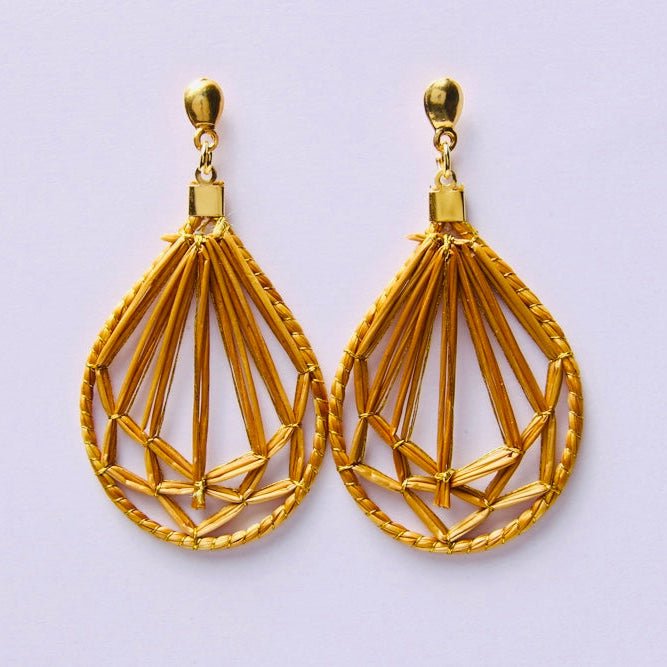
Mimosa Earrings
Handmade. Limited availability.
✔ Free shipping
✔ 14-day return policy
✔ Secure payment with PayPal & Klarna
Mimosa Earrings – Brazilian Lightness. Timelessly elegant.
The Mimosa earrings combine the beauty of natural materials with a modern, delicate design language. Crafted from original Capim Dourado, Brazil's golden grass, they impress with their artistic design and exceptional lightness.
A piece of jewelry for women who appreciate fine details, craftsmanship, and timeless elegance.
Why Mimosa is so special
🌿 Handmade from original Capim Dourado – each pair unique
✨ Delicate geometric design – modern and elegant
🤍 Feather-light & comfortable to wear – perfect comfort for every day
🛡 Nickel-free clasp, 18k gold-plated – suitable for sensitive skin
♻️ Sustainably & fairly made using traditional Brazilian craftsmanship
Design & Feel
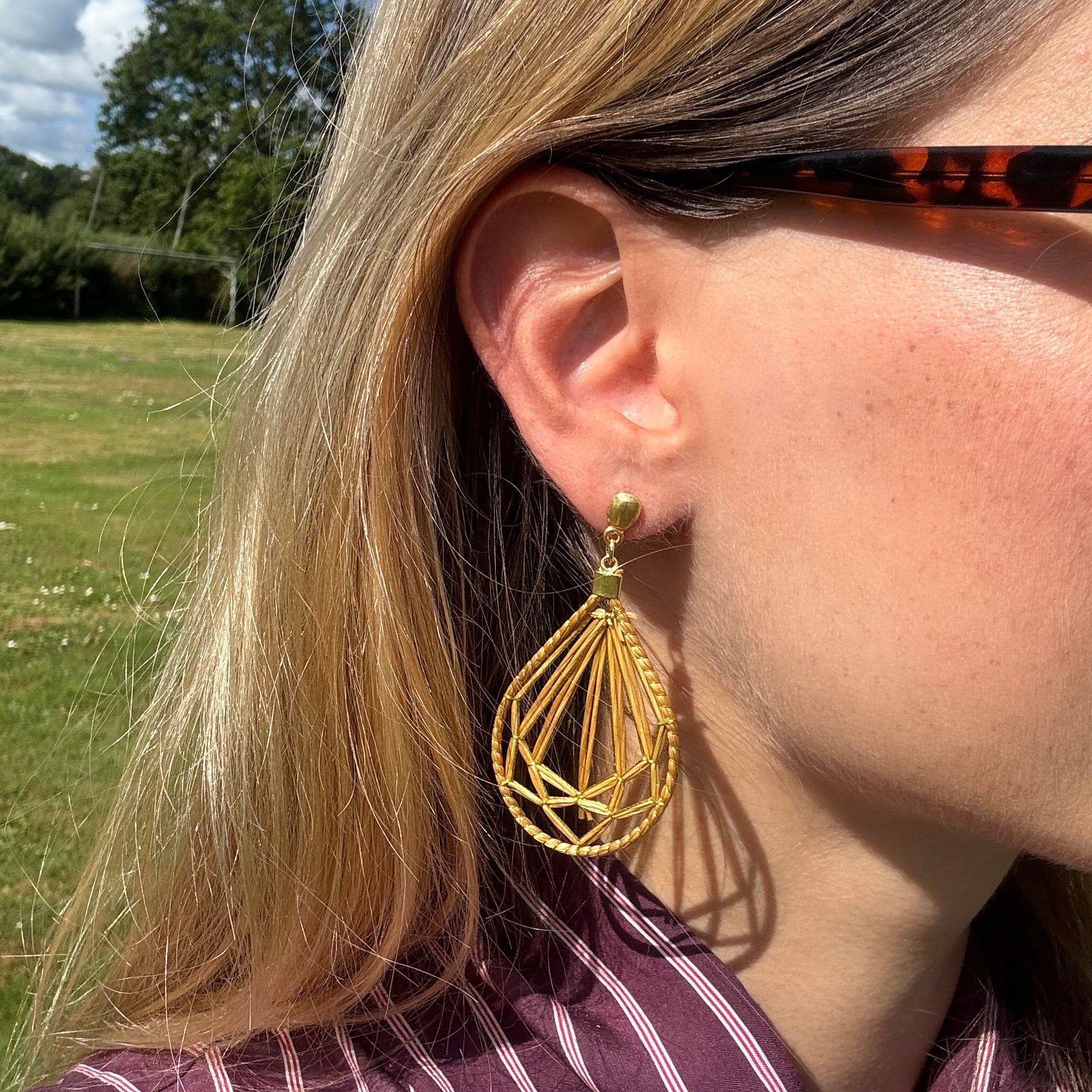
The teardrop-shaped silhouette frames an artfully crafted pattern of fine lines and geometric elements. The open structure gives the Mimosa earrings a special lightness and beautifully highlights the natural gold of the Capim Dourado.
With a length of approx. 6.5 cm, they set stylish accents and appear elegant and harmonious at the same time. Thanks to their feather-light weight, they are particularly comfortable to wear and accompany you effortlessly throughout the day.
The nickel-free, 18k gold-plated clasp ensures a secure hold and high wearing comfort.
The story behind it
Capim Dourado grows exclusively in the Brazilian Cerrado, where it has been processed for generations by experienced artisans. The fine golden fibers are transformed into unique pieces of jewelry that combine the beauty of nature with traditional craftsmanship.
The Mimosa earrings represent the art of creating modern and timeless designs from natural materials.
Details at a glance
- Material: Capim Dourado (vegetable)
- Design: Teardrop shape with delicate geometric pattern
- Clasp: nickel-free, 18k gold-plated
- Length: approx. 6.5 cm
- Feather-light & comfortable to wear
- Handmade in Brazil
14-day return policy.
Choose options

golden grass
the material
Capim Dourado is a rare, protected natural raw material from the interior of Brazil. Its natural, golden sheen makes every sustainably harvested and handcrafted piece of jewelry a unique item.

TRANSPARENT ORIGIN
SUSTAINABLE PRODUCTION
Sustainability and transparency are core values of our work. Through regular personal exchange with the artisans on site in Brazil, we ensure fair conditions, high quality, and the authenticity of our products.

Processing
HIGH-QUALITY MATERIALS
Our jewelry is made from a nickel-free metal alloy with real 18k gold plating and is particularly skin-friendly. Embellished with gemstones, some with palm silk, and Capim Dourado – vegan, durable, and sustainable – we recommend careful handling to preserve their beauty for a long time.

About Us
MY JOURNEY WITH CAPIM DOURADO
I'm Julia, founder of the jewelry label Capido. Born in Brazil and living in Germany since 2016, I combine my passion for jewelry and craftsmanship – shaped by my grandfather, a goldsmith – with the unique beauty of Capim Dourado. With Capido, I bring handmade, sustainable jewelry from Brazil to Europe, uniting tradition, quality, and timeless design. Capido is based in Oldenburg.

CAPIDO – JEWELRY LABEL FROM OLDENBURG
FAIRS, MARKETS & RETAIL
What began as a personal discovery at a Brazilian street market is now an established jewelry label from Germany. Capido is present at design markets and trade fairs and available in retail – always with personal contact with customers and partners in Brazil at its core.

Why Capido
OUR MISSION
With Capido, we want to showcase the beauty of Capim Dourado jewelry from Brazil – transparently, fairly, and sustainably – and bring a piece of Brazilian artisanal culture to Germany and Europe.
JEWELRY WITH ATTITUDE
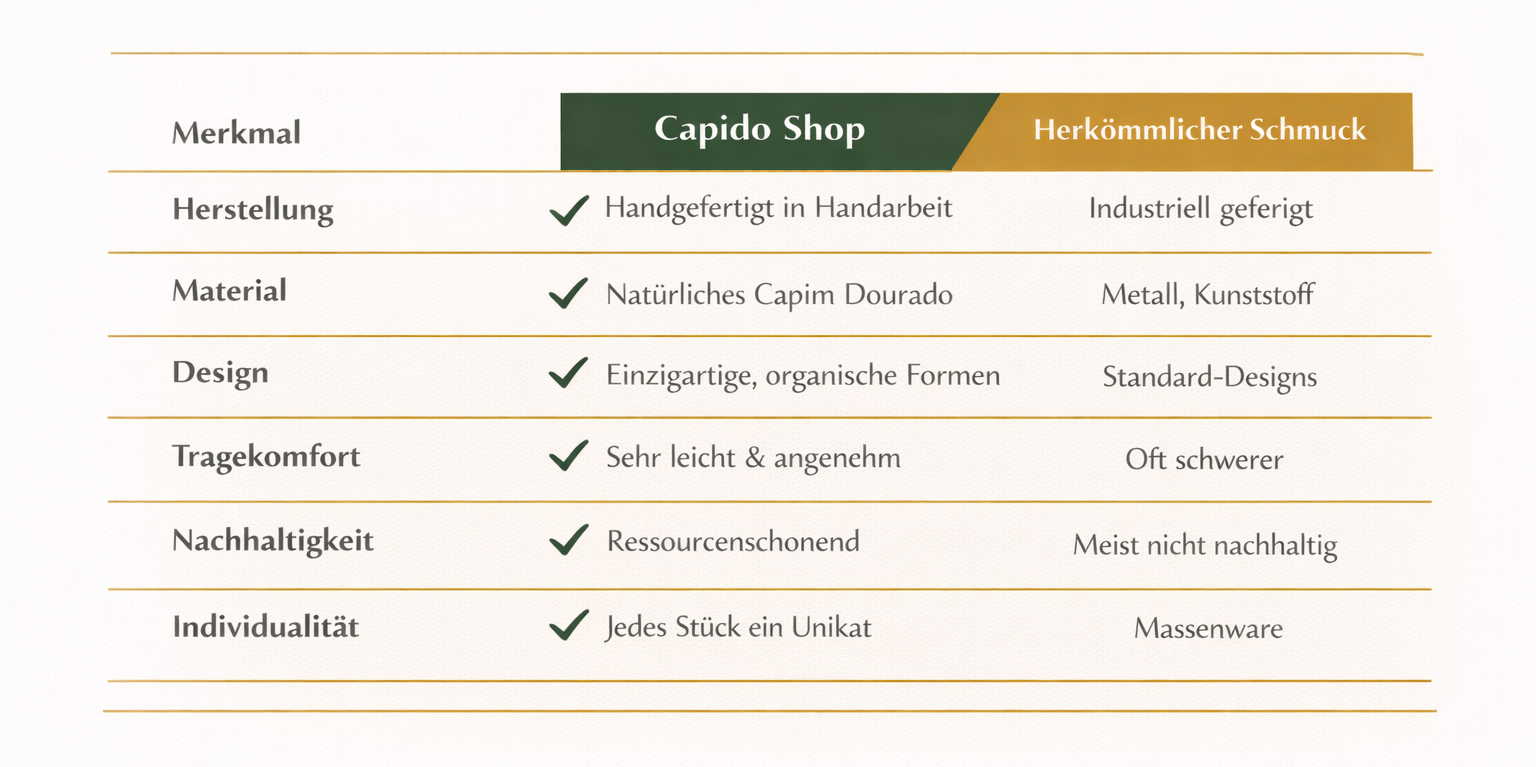
THE DIRECT COMPARISON
At Capido, the focus is on handcrafted jewelry pieces created with great care, traditional techniques, and natural materials. But what exactly is the difference between handcrafted jewelry and conventional mass-produced goods?